
Map Drawing Tutorials
Do you want to learn how to draw fantasy maps for your story? Here you will find a collection of tutorials for drawing mountains, forests, canyons, and more!
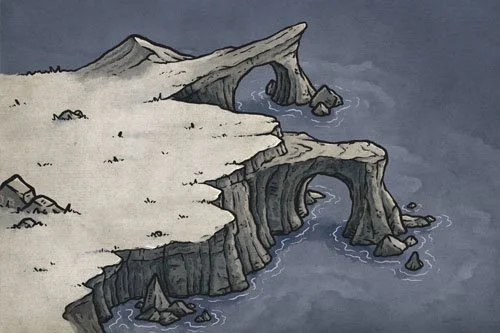
Waves work patiently at the land, and now and then an arch of stone remains, carved by water and weather. Their silhouettes define the shoreline, and become iconic features on your fantasy map.
In this tutorial, I’ll show you how to draw a sea arch, breaking it down into simple steps you can easily follow.
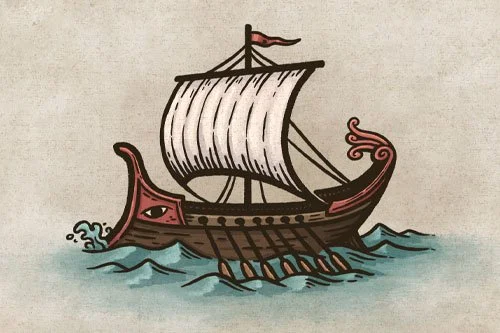
The sea stretches before you, the same wine-dark expanse crossed by Odysseus as he wrestled with gods, monsters, and the whims of fate. Greek ships like his carried stories across the Mediterranean for centuries, their painted eyes watching the horizon for both danger and destiny.

Many of us first fell in love with maps and fantasy while gazing at J.R.R. Tolkien’s map of Middle-earth. Something stirred our imagination as we stared at the Misty Mountains and searched for the entrance to Moria. Inevitably, this led us to want to pick up a pen and draw a map of our own. But where to begin?

The air is heavy with the scent of salt as you trace the winding river to its end. Here, the waters split into countless streams spreading like the roots of a tree into the sea. The soils are rich, teeming with life. A place where civilizations might rise, or secrets might sink beneath the silt.
In this tutorial, I’ll guide you through drawing river deltas that look as though they belong on ancient charts and treasure maps. Features that not only shape the land, but hint at the stories and mysteries flowing through it.

The room is filled with the scent of dust and old wood as you pry open the creaking cellar door. Stacked in the corner are a few battered wood crates, their rough boards concealing who knows what treasures or traps inside.
Every good dungeon, inn or market needs a place to stash supplies or secrets. In this tutorial, I’ll show you how to draw some wood crates that can add a layer of believability or mystery to your fantasy map.

As you enter the tavern, you see a crackling fireplace casting a warm, golden glow across the room, its flickering light dancing on the worn wooden beams and inviting you to rest your weary bones after a long journey.
A fireplace like this isn’t just a detail, it’s a place to gather for your next adventure. But, how do you draw one on your map?

Swamps are a haunting feature of any fantasy map, their still waters and tangled growth hiding stories of mystery. In this tutorial, you’ll learn how to bring these wetlands to life, starting with basic shapes and building up details with simple steps anyone can follow. By the end, you’ll have the skills to create a swamp on your map that your readers or players can explore.
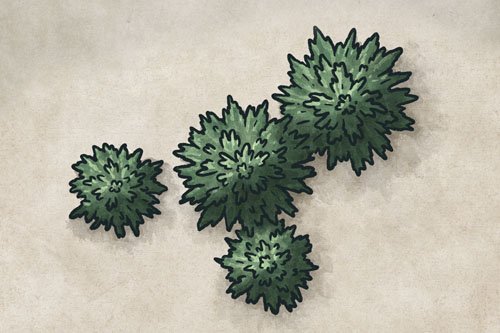
Forests breathe life into your city maps, transforming generic landscapes outside the walls into locations that could a secret tomb or shelter a group of bandits. You never know what secrets might be lurking beneath the boughs! Pine trees can tell you something about the environment of the location. Perhaps it's an area with low-quality soil where only the hardiest trees can grow, or maybe it's an alpine location in the mountains. Either way, using different species of trees is a great way to subtly convey something about a location, which makes for a more immersive story for your players or readers.
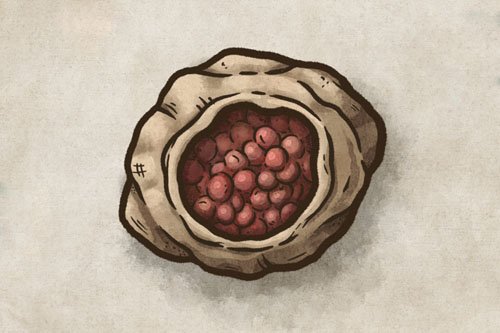
One of the things that adds flavor to a dungeon or battle map is the details you add to the room. If you want to create immersive settings for your RPG campaign that your players want to explore, they shouldn’t be walking into mostly empty rooms with random monsters. Is this just a sack of apples, or could there be something hidden inside?
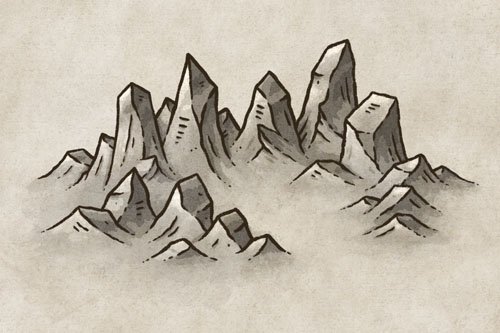
These sinister rock formations will loom ominously over your map, their impassable cliffs and sharp, jagged peaks casting long shadows across your world. Mountains are not just obstacles; they are characters in your tale, whispering of dangers unknown.
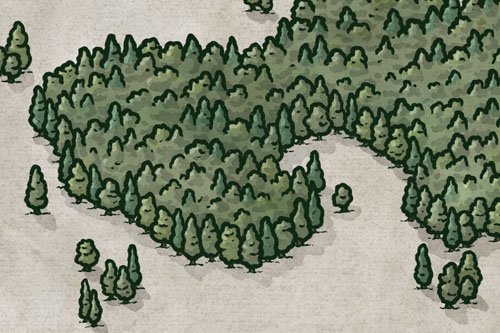
Do you want to learn how to draw a dense, old growth forest on your fantasy map? From Fangorn in Middle Earth, or The Old Forest in Harry Potter, some of the most iconic locations are hidden beneath the trees.
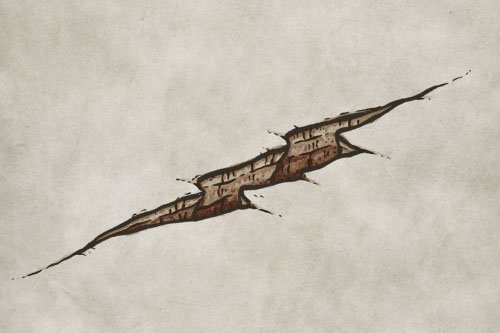
There are so many storytelling possibilities for your RPG adventure by including something like a mysterious chasm. Is it a natural feature? Was it created by someone in the ancient past with the power to make fissures in the rock itself? Is it the entrance to a portal or an underground city? The question is…how do you draw a chasm?
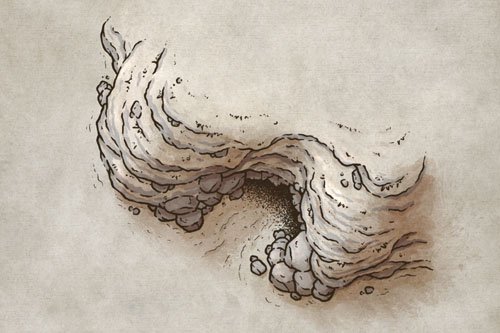
If you want to create interesting maps for your RPG adventure, including points of interest to encourage exploration is key. Discovering a cave entrance in the face of a cliff lends to a number of storytelling possibilities and encounters. But, how exactly do you draw something like that, especially if you’re using a top-down perspective? It’s certainly a challenge, but I want to walk you through the process and share some tricks so you can draw a cave like this on your next map. Let’s start mapping!
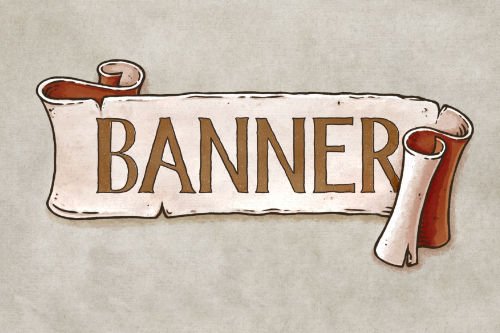
Learning how to draw banners is an essential part of creating an immersive fantasy map. You can use them to share the name of the region you’re mapping, or for individual cities, locations, or territories.
However, learning to draw banners can feel overwhelming if you’re not confident in your artistic skills. In this tutorial I want to walk you through how to draw a relatively simple banner anyone can draw, that still looks interesting and professional.
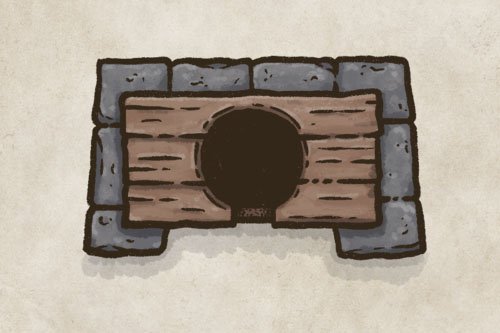
What do you do when you’re raiding an orc-infested dungeon and nature calls? Well, if the wizard who designed the dungeon wants to create a sanitary work environment, then hopefully he installed some toilets. If you want to be prepared, then in this tutorial I’ll walk you through every step to making a throne worthy of any goblin king.
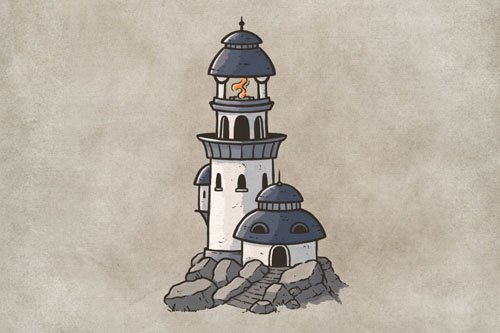
Is there a dangerous stretch of coastline on your fantasy map, where ships must sail carefully lest they get caught upon the hidden stones below? Then adding a lighthouse may be the thing you need to warn weary travelers to keep their distance. In this tutorial, I’ll walk you through the steps so you can easily draw a lighthouse icon just like this on your map.
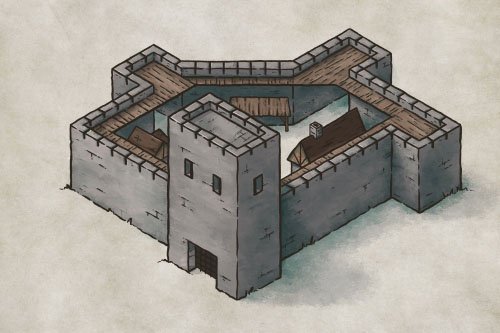
If you want an easy way to draw three-dimensional buildings and structures on your fantasy map, then using an isometric perspective is the method for you! The reason this technique is so achievable is that it really comes down to following a grid. As long as you do that, then you can draw all kinds of things like buildings, towers, or something as complex as a city.
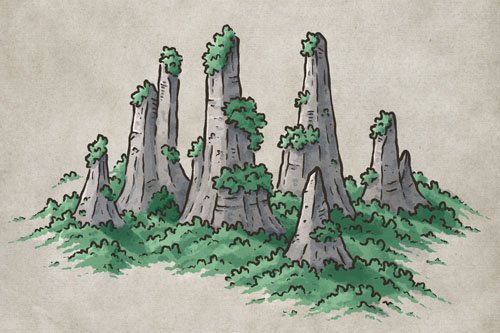
If you enjoy finding inspiration for your stories from real-world locations, then look no further than the stone pillars of Wulingyuan, China. These impressive monoliths are one of the most iconic locations in the world; with their unusual shape, covered with trees that somehow manage to grow hundreds of feet in the air like a natural hanging garden. In fact, the movie Avatar pulled inspiration from this location when creating the world of Pandora! But the real question is, how do you draw something like that on your fantasy map? In this tutorial, I’ll break down the process so you can add these iconic features to the world you’re crafting.
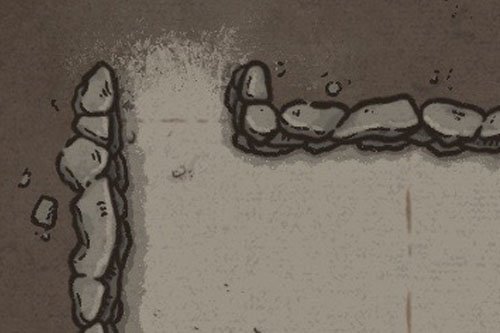
There are so many ways to draw walls for a dungeon map, but if you want something that looks like it’s hand-made from uncut stone then this is the technique for you. This is great if you’re creating a map of a tomb or a cultic site for your next rpg campaign; anywhere you want a setting that feels ancient and lost to time. In this tutorial, I’ll break down the process so you can draw rough stone walls on your next dungeon map. Let’s get mapping!
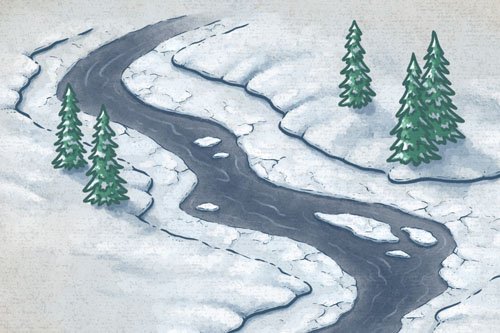
How do you draw something like snow on your fantasy map? Fortunately, it is pretty simple if you know how to draw your line art and build your color palette. In this tutorial, you'll learn some simple steps to transform a typical river into a winter setting for your next story. This is a great way to level up your maps whether it's for an rpg like Pathfinder or your next novel. So let’s start mapping!
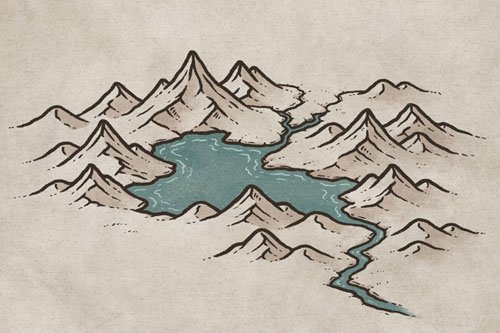
It’s one thing to draw a lake in a nice open region, but how can you realistically draw it tucked into the mountains? In this map tip, we’ll look into how a lake forms, and then help you to learn how to draw one on your fantasy maps!
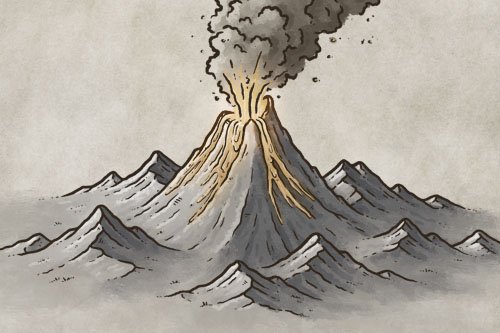
It’s one thing to draw a dormant volcano, but how about one that’s erupting? In the previous tutorial, we walked through How to Draw a Volcano on Your Fantasy Maps, but now let’s make it a bit more dynamic so it can be a real focal point for your worldbuilding.
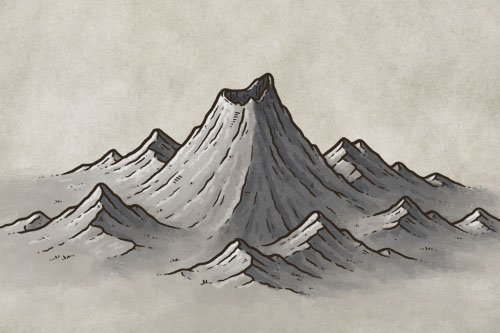
Volcanoes are one of the most dramatic features you could include on your fantasy maps, not only for their destructive power but also for their unique beauty. It’s not surprising many historical cultures viewed them as a place to commune or appease their deity. Adding a volcano to your maps can open up many storytelling possibilities, but how do you go about drawing one? In this tutorial, I will break down my process so you can start mapping!
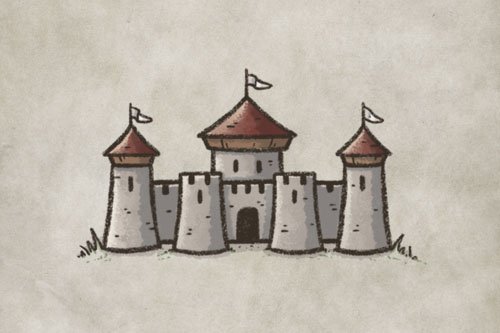
Drawing castles on your map is a great way to add a sense of history and culture to the world you’ve created. Not only can they represent a seat of power in a region, but they are also a hub for trade and politics. Best of all they are pretty easy to draw with some simple shapes that can be shifted around to provide endless variety and give different cultures a unique look.
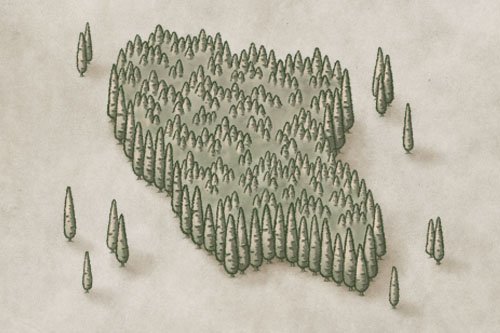
From the gloom of Mirkwood to the comfort of the Hundred Acre Wood, forests are one of the most iconic settings in storytelling. There is just something about a forest that brings a feeling of mystery, not knowing what lies around the bend in the trail. Whether you are creating a setting for your next rpg campaign or writing a story for your book, an enchanted glade in the middle of a dense canopy, or a lost city reclaimed by the trees is where myths are born and retold.
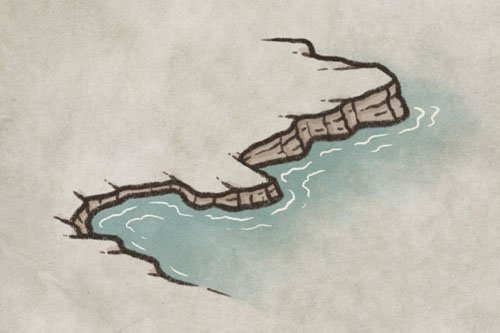
If you want the coastlines to look like they’re popping off the page, then adding some cliffs is a great way to do it. Fortunately, it’s pretty easy to do and it will instantly make your map look much more professional. In this Map Tip, you will learn some simple techniques to help your maps stand out from the crowd, so let's start mapping!
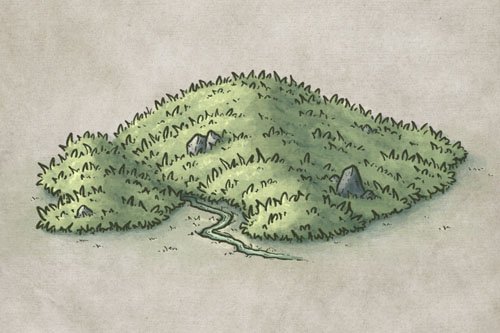
Ready to enter the dense canopy of a tropical jungle where the air is so thick you can feel it, and there is a new danger under every leaf? In this tutorial I will walk you through some steps so you can learn how to draw a dense jungle on your fantasy maps!
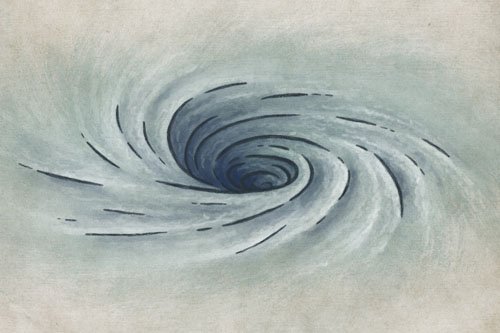
There is something mysterious about a swirling vortex of water that seems to be draining into the depths of the ocean. This is why a whirlpool or maelstrom is a compelling feature to include on your fantasy maps as it opens up so many storytelling possibilities. In this tutorial, I’ll walk you through some easy steps so you can draw your own whirlpool on your fantasy maps.
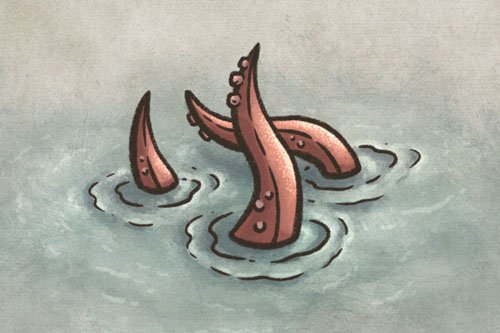
What lurks below the surface? There is something terrifying about knowing there could be a massive predator swimming just below you with no idea that it’s even there. In this tutorial, I’ll walk you through some easy steps so you can draw a kraken on your fantasy maps.
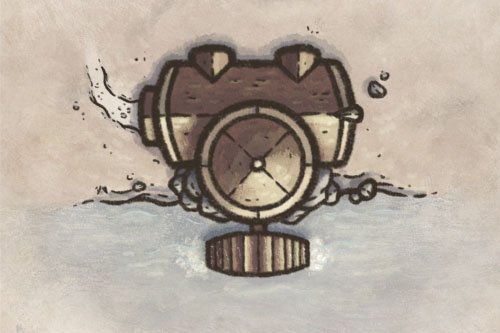
How do you turn grain into flour without electricity? One of the most effective methods was to harness the power of water to turn a large water wheel, which would turn a great stone that would grind large quantities of grain into flour. Including a water wheel on your city or village map is a great way to give another layer of interest and realism to your fantasy setting.