The Kelpie of Celtic Mythology
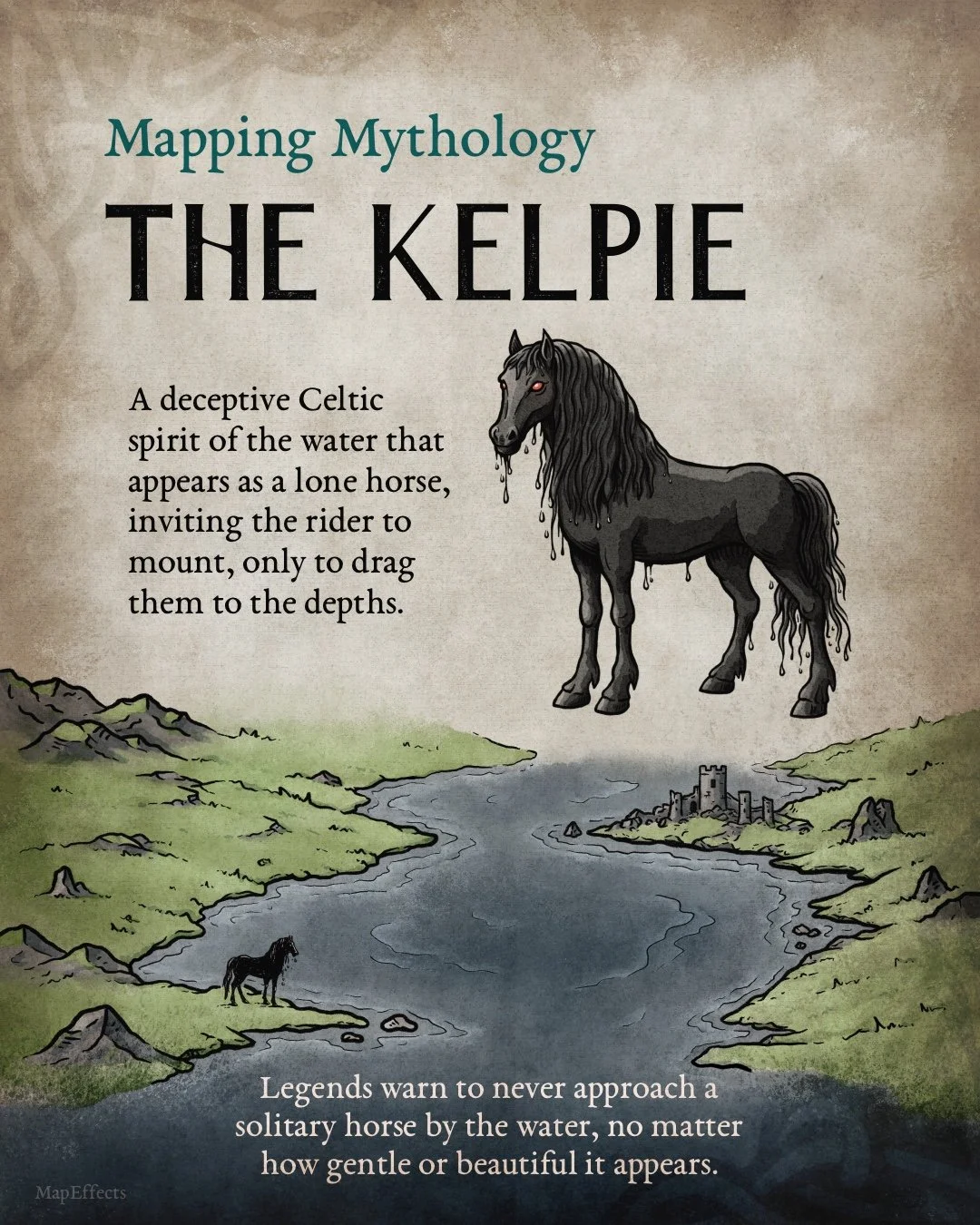
In the ancient stories of Scotland, down by the misty lochs and the swift rivers, there lives a water spirit known as the kelpie. Most locals remember it first as a horse, a firmly muscled creature standing alone at the water's edge with its dripping mane intertwined with aquatic plants pulled up from the depths. Yet the kelpie is no ordinary beast. It is a shapeshifter, and in the old tales, it sometimes steps out of the water as a seductive man or a woman. Still, it is that lone horse that lingers in memory, calm and inviting, as though it has been waiting there just for you to draw near.
And that is where the true danger lies, for the kelpie never shows its darker intentions. It carries something of the Scottish landscape with its wild beauty, a living reminder of those treacherous edges where the solid ground meets the portal to the depths. One careless touch, and you will meet death with a smile on your face, never realizing the danger until it’s too late.
Where Are Kelpies Found?
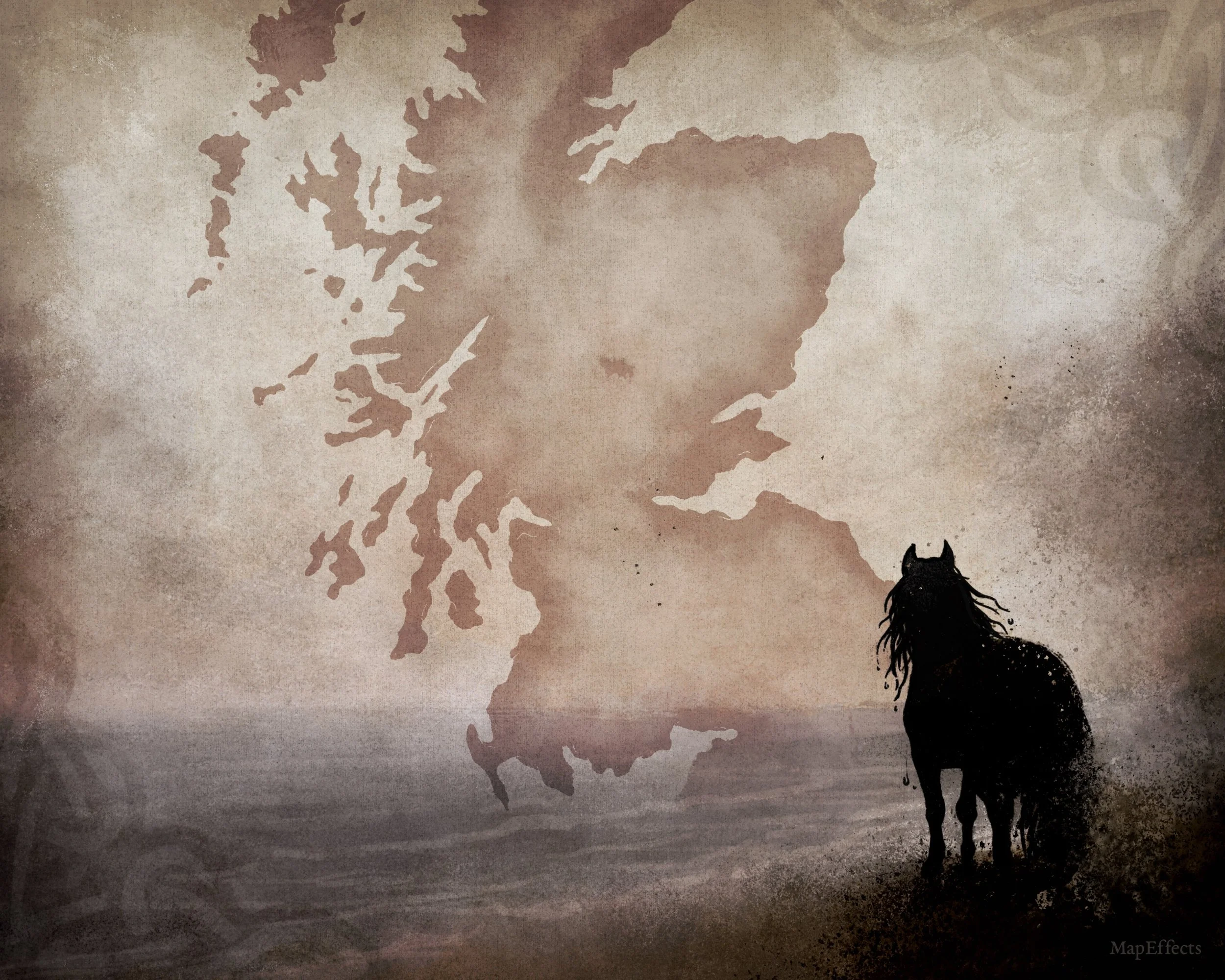
They say that every loch and waterway holds the potential dwelling of a kelpie. With tens of thousands of lochs scattered across the rugged landscape, it is no wonder that most have their own unique stories. In some places the kelpie becomes tied to one particular spot, perhaps a lonely river crossing or a stretch of water long known to be treacherous. Over the years these dangerous places gather stories around them like moss on stone, until the name of the kelpie and the name of the water seem to belong to each other. What matters most is that the kelpie is not a wanderer. It is bound to its place. It belongs to the water that gave it life, and its stories serve as a living mark upon the land, a reminder that certain places ask for caution and respect.
A Boundary Creature
The kelpie dwells right at the boundary, where solid land gives way to water. These are old thresholds, places that have always felt uncertain, neither fully one thing nor the other. In the old ways of thinking, such edges carry a kind of charged power, as though the veil between worlds grows thin there. The kelpie belongs to that uncertain line. It is a creature of edges, born where the known world begins to slip into the unknown. Some stories speak plainly of death. The kelpie lures its victim onto its back or into its grasp, then plunges into the deep, dragging them down to the cold, silent depths where they drown. Yet in other tellings, there is a deeper sense of transportation, as if the creature carries the unwary not just to death, but into the otherworld, that shadowy fairy realm that lies beyond mortal sight. The traditions do not always draw a sharp line between the two and what matters most is the crossing itself. Once you step past that boundary, once the solid ground falls away and the water takes hold, there is no return. Whether it is simple drowning or a journey into something stranger, the result is the same. The old life is lost, and the depths keep their own.
How to Identify a Kelpie
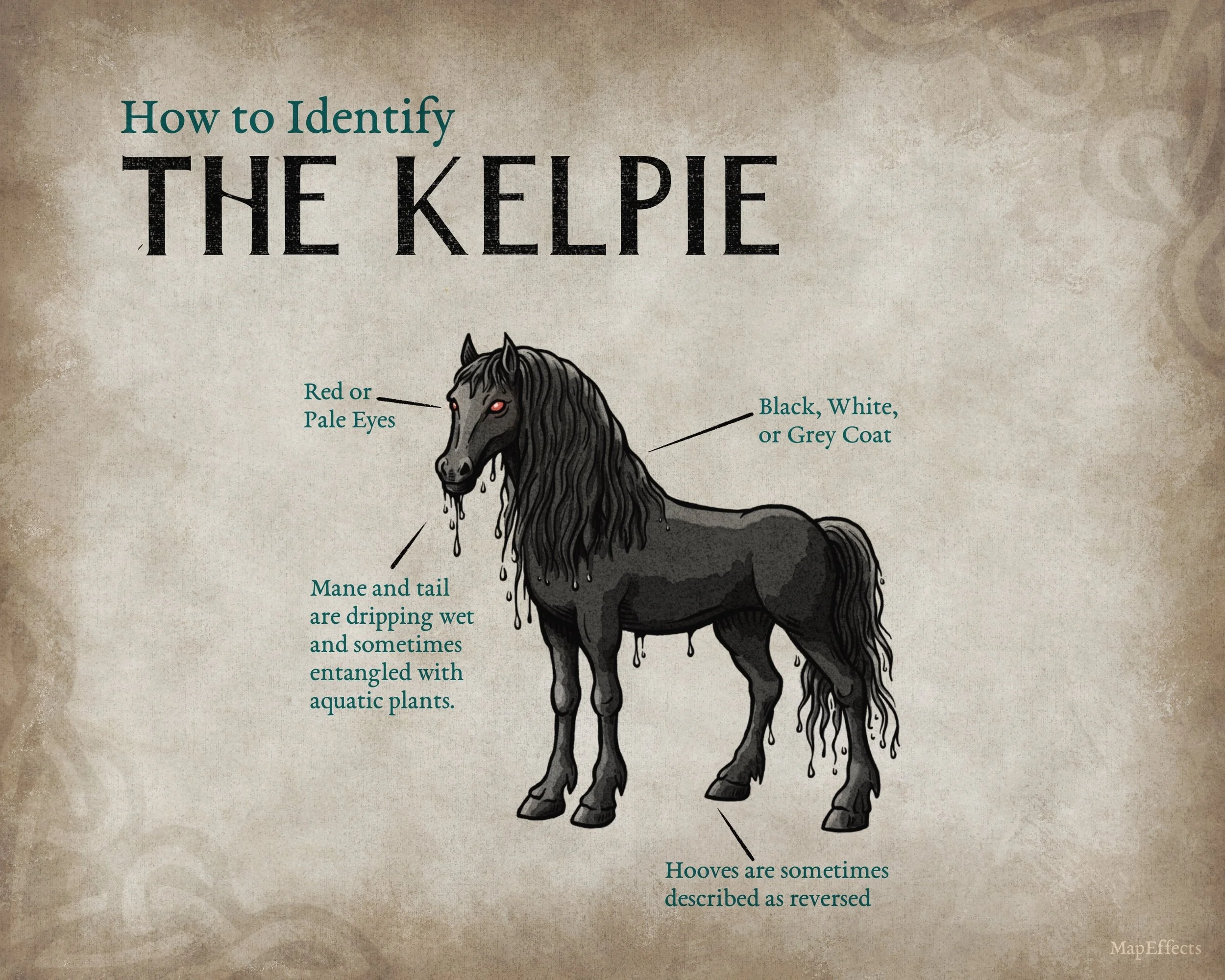
Though the kelpie appears as a horse, there are certain details that are said to set it apart from an ordinary animal. Its mane and tail are often described as wet, sometimes tangled with weeds or plants from the water, as though it has just emerged. Its eyes may appear pale and unnatural, giving it a presence that feels slightly off even if everything else seems normal. Its coat is often described as dark, though some traditions speak of a white horse, and in certain accounts, its hooves are reversed.
These signs are not always immediately obvious, and that is part of the pattern in these stories. The kelpie does not reveal itself clearly or all at once. It appears familiar enough to be approached, and only upon closer inspection does something feel wrong. By then, it is often too late.
The Lure
The most consistent thread running through every kelpie tale is the way it draws people in. The creature often stands quietly at the water’s edge, as if it has been left behind by its owner or is simply waiting for someone kind enough to take it home. There is nothing immediately threatening about it. That calm, patient look is exactly what makes the encounter so dangerous. When a person draws near, the kelpie allows them to approach without fear. It may even stand steady while they climb onto its back. But the moment contact is made, everything changes. The rider finds they cannot let go and their hands stick fast to the creature’s hide as though glued there by some dark magic. With a sudden plunge, the kelpie surges forward into the water, dragging its victim beneath the surface and down into the cold, silent depths.
Some traditions add a chilling detail. When the waters finally grow still again, the only trace left behind is the victim’s liver washed up on the shore. That single gruesome sign tells everyone that the transition was not to some parallel world, but an embrace of death. These stories were told most often as warnings, especially to curious children who might wander too close to the water. Yet they carry a deeper truth as well. The edge of a loch or river can look perfectly calm and harmless on the surface, while beneath it lie hidden things that can claim a life in a moment. The kelpie, in its way, gives a face and a name to dangers that have always been real.
Capture at Your Peril
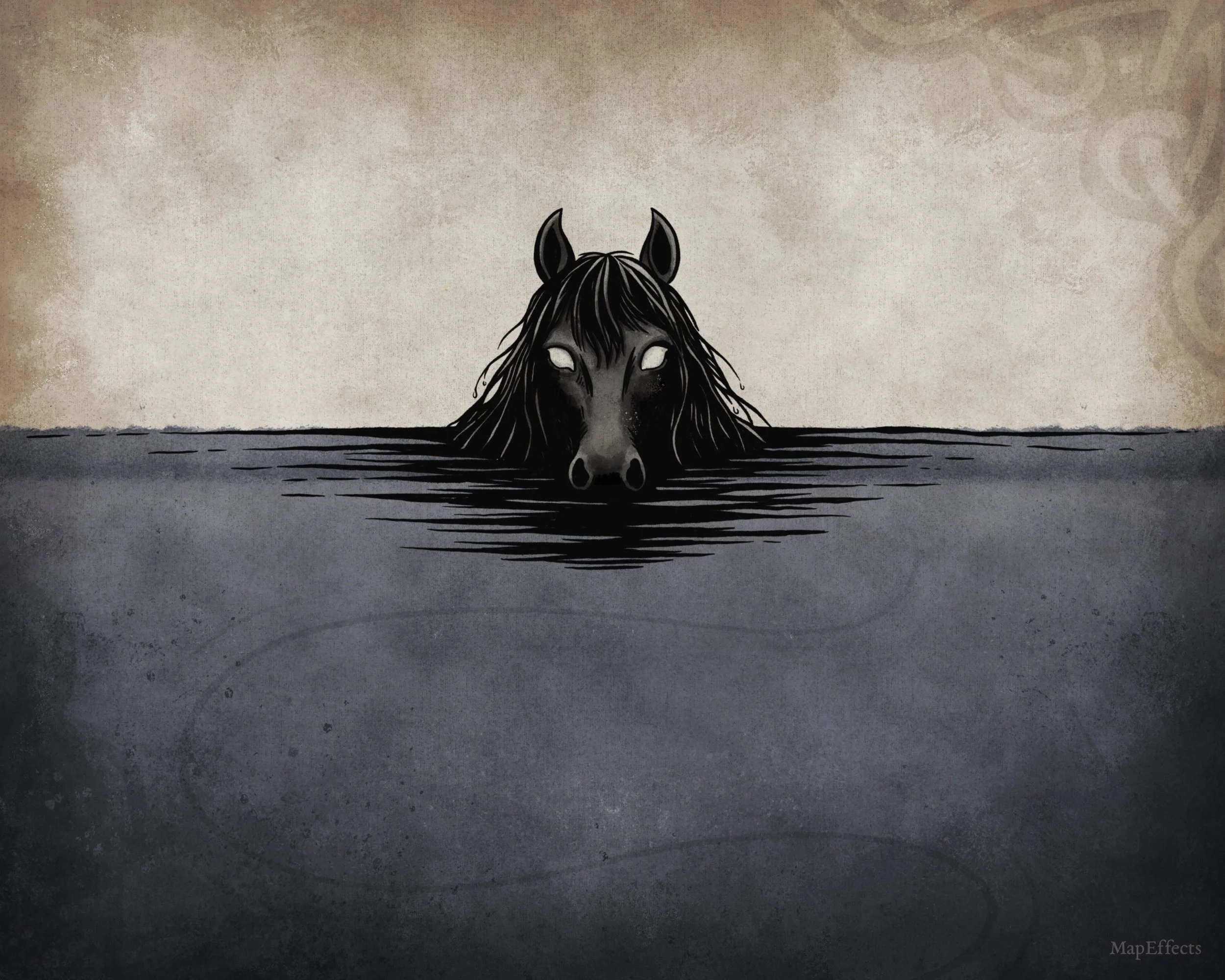
Kelpies are said to possess the strength of many horses, far beyond anything an ordinary animal could manage. Yet there are old traditions in which a kelpie can be captured, at least for a time. If a man can slip a bridle over its head, the creature can be bound and controlled. While it wears that bridle, it may be forced into heavy labor, hauling stone for walls, pulling loads that would break a normal horse. This control, however, is never more than temporary. The stories are clear that the moment the bridle is removed or slips free, the kelpie returns straight to the water. And when it does, it does not simply vanish without consequence. It remembers what was done to it, and its return often brings vengeance, ruin, or death to those who dared to bind it. Local legends tell of one man of the MacGregor clan who managed just that. He bound a kelpie and used its strength to build his stronghold. The work went faster and heavier than any ordinary horse could have allowed. But once the creature escaped…needless to say that line of the family suddenly ended.
A Tale of the Kelpie
One story tells of a group of young boys who set out to fish in waters known to be dangerous. While near the shore, they came across a fine horse standing unattended. It looked calm, with nothing about it suggesting immediate danger. Whether drawn by the beauty of the animal or by some quiet magic, they forgot all the warnings they had grown up hearing. One by one they climbed onto its back, treating it as they would any ordinary animal they might find grazing, laughing and joking as they settled in. The youngest among them hung back a little, unsure. But the horse seemed so gentle that he finally reached out and touched its coat, perhaps to stroke its neck. That was the moment everything changed. His hand stuck fast to the hide as though glued there by filaments of magic. In that instant he understood the terrible truth, while the others still laughed, oblivious to the danger. He tried to pull away but could not. With a last act of desperation, he drew his knife and cut off his own hand, freeing himself just as the creature turned toward the water. The kelpie rushed headlong into the loch, carrying all the rest of the boys with it where they were dragged beneath the surface. He alone returned to shore, forever marked by the loss of his hand and the memory of his friends’ laughter fading into the cold depths.