
Mountains - Where to Place Them on Fantasy Maps
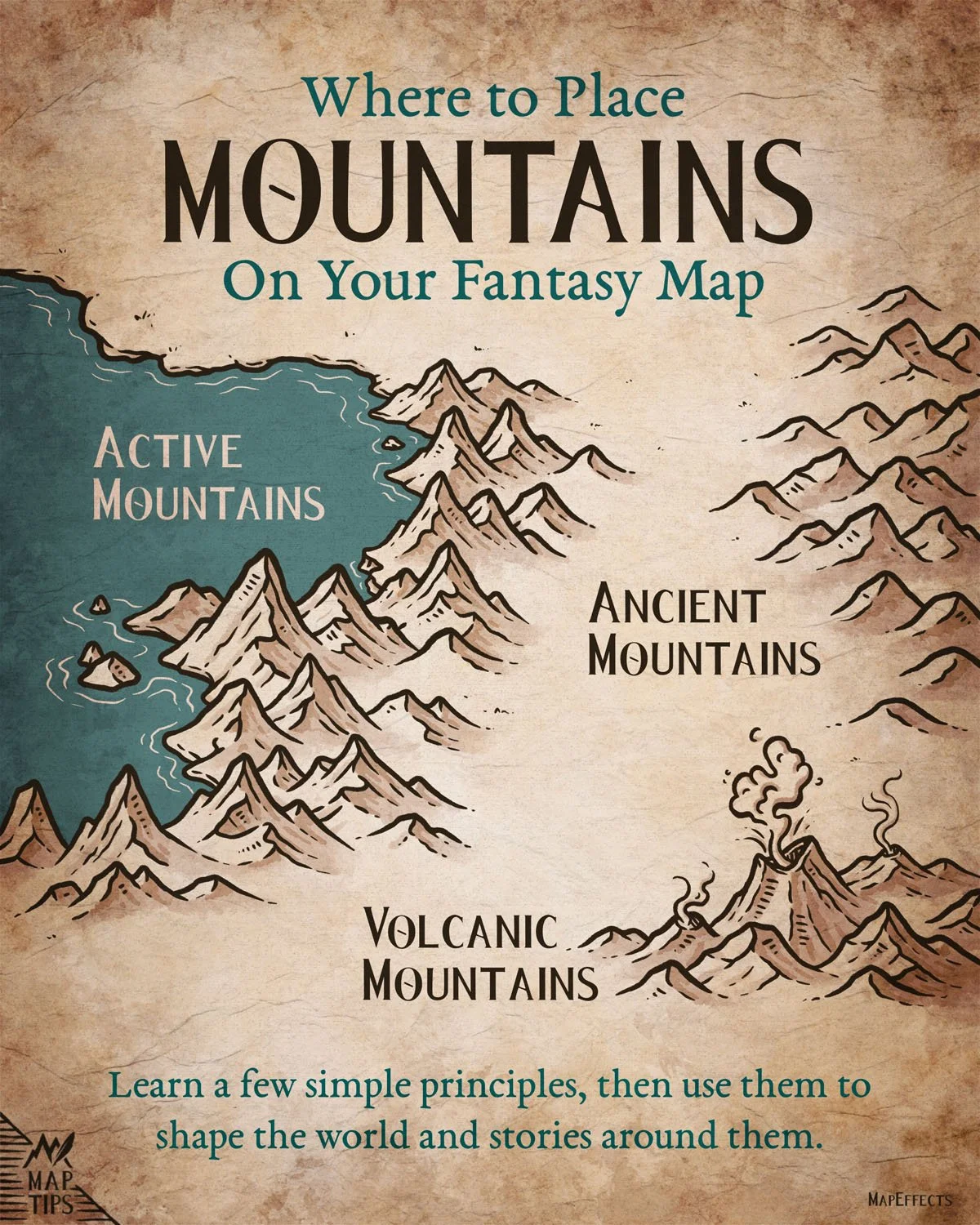
You’ve drawn your coastline, and now you’re staring at a wide-open continent wondering… where in the world are the mountains supposed to go? Do you just put them in the middle, or scatter them around the page? How does a mountain actually form, and do you need a complex tectonic map in order to begin?
In this field guide, we’ll look at three believable ways mountains can appear in your world, then use those ideas to decide where they belong based on the geography and story you want your map to tell. By the end, you should be able to look at an empty continent and confidently add where your mountain ranges should go.
Active Mountain Ranges
Tectonic Plates…The Overrated and Unhelpful Answer
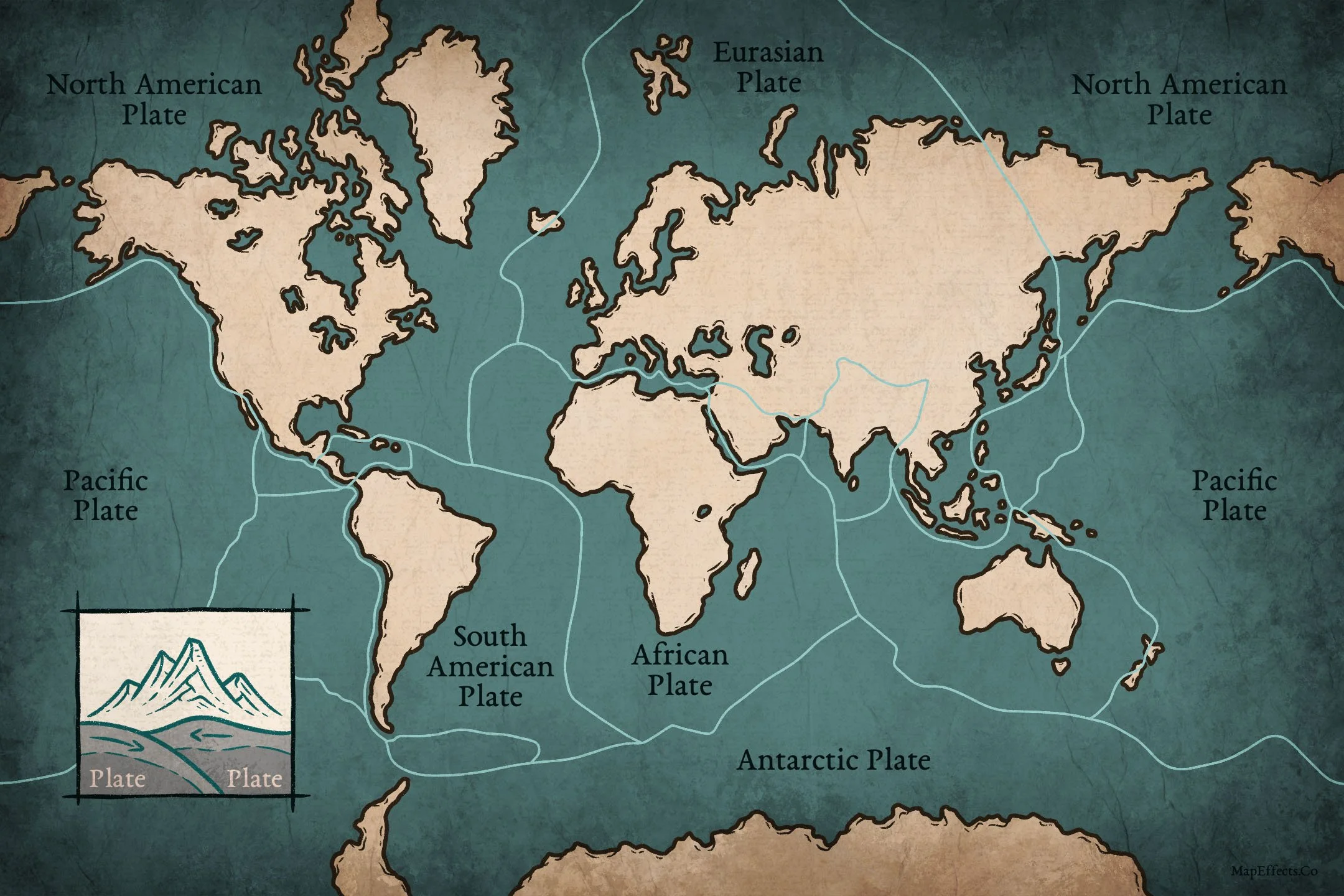
If you look at the surface of the earth, you may already know it isn’t a solid shell. It’s broken into enormous sections called tectonic plates that, in a sense, float over the surface and are constantly moving, even if it’s too slowly for us to notice. The movement of these plates is one of the primary ways mountains are born. As they shift, they can collide with one another with dramatic effect, or pull apart and reveal the volcanic underbelly. Think of it a little like pushing two rugs into each other across the floor. Eventually they start to bunch and buckle where they meet, creating mountains you can trip over during your next late-night trip to the fridge.
Here’s Why Tectonic Plates are Unhelpful
The logical conclusion you could take away from this is that, in order to place mountains on your map, you first need to map out all the tectonic plates and then place mountains accordingly along the boundaries. Right? But if you look closely at the map above, you may notice something… many of the continents sit almost in the middle of these large plates, while most of the boundaries actually run beneath the oceans.
Now, if you look at a map of the topography of the oceans, you will certainly see underwater mountain ranges forming along these plates. But unless you’re mapping an underwater world, this doesn’t really help you. There are certainly mountains actively forming above the surface, but it doesn’t really answer where you are supposed to put mountains on your map if you’re basing this on Earth’s tectonics.
So, if the thought of mapping out plate tectonics to draw your fantasy map gives you hives, the good news is you don’t have to. You certainly can if that’s something you enjoy, but it isn’t something you need to do before you can begin. Many of our most familiar mountain ranges don’t sit neatly along the plate boundaries we see today, which gives us a clue that something more is going on.
If mountains form where plates collide, why are so many major mountain ranges sitting in the middle of a plate, nowhere near the edge?
That brings us to ancient mountain ranges.
Ancient Mountain Ranges
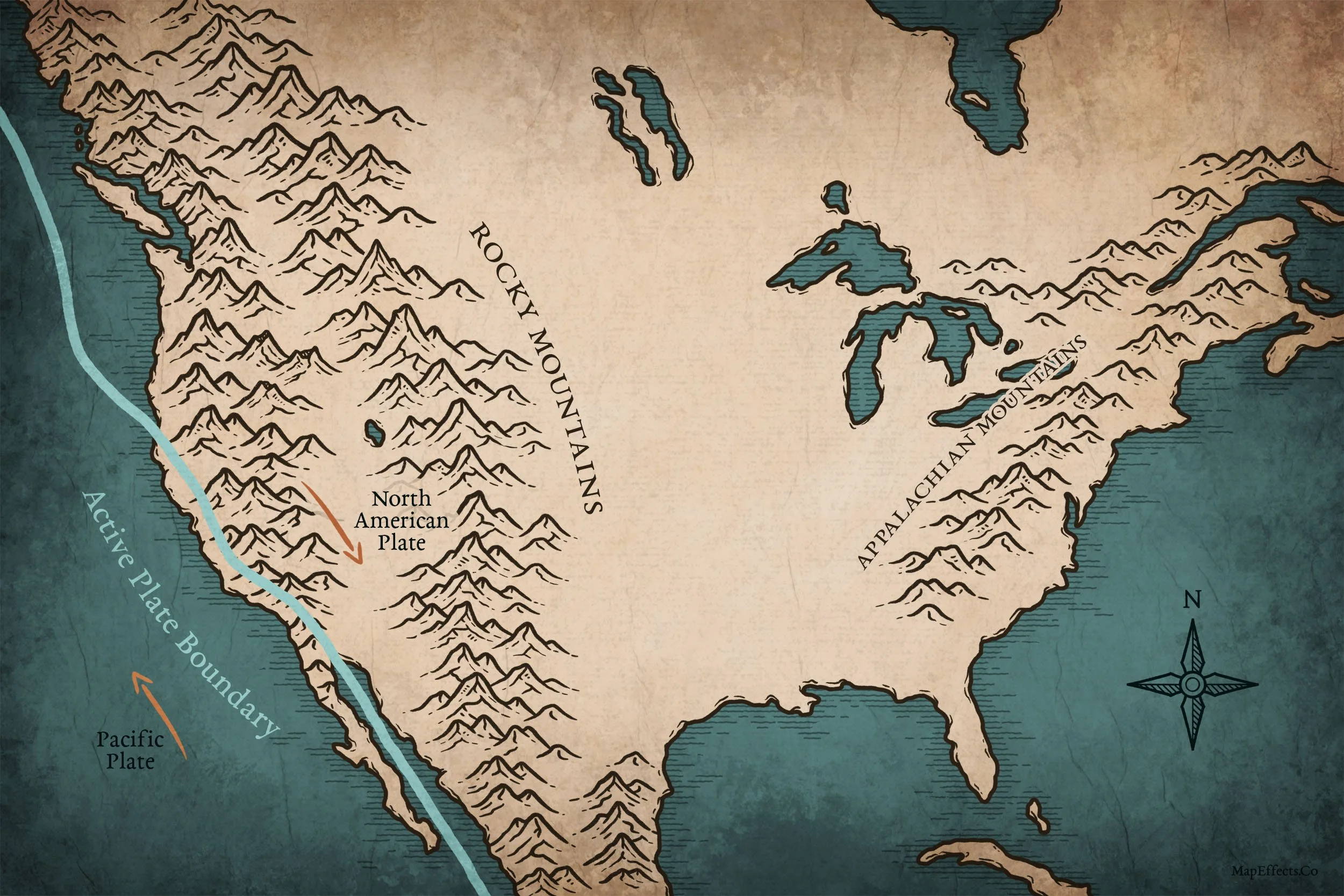
If active mountain ranges form where plates are pushing together, that seems to leave us with an obvious problem. There are plenty of mountain ranges sitting nowhere near the edge of a tectonic plate! The Appalachians are a perfect example. They stretch through the eastern United States, yet today they sit comfortably inside the North American Plate.
The simple explanation is the world has changed around them. The Appalachians formed during ancient collisions between continents, but those continents did not stay arranged that way forever. Later the land pulled apart, the Atlantic Ocean opened, and the active plate boundary moved away. The mountains stayed behind as a kind of scar from an older version of the world.
What This Means for Your Map
The good news is, this gives you a lot more freedom when placing mountains on a fantasy map! If you want a range running through the middle of your continent, you do not necessarily need to invent an active plate boundary there. You can simply imagine that two pieces of your world collided there long ago, leaving the range behind even though the plates have since shifted. That said, an inland range does not automatically mean an ancient one. Without getting too technical, we’ll just say that tectonic forces can sometimes build mountains (Like the Rockies) surprisingly far from the actual edge of a plate, so there are other ways to justify younger mountains deep inside a continent.
But, in general, older ranges have also had much more time to be worn down by wind, water, ice, and weather. That means they may be lower, rounder, and less dramatic than a young active range, although there is no need to turn every ancient range into gentle hills. The important idea is that their position tells you something about the history of the land, not necessarily what is happening beneath it today.
For fantasy mapping, this is one of the most freeing things to understand about mountain placement. You can put an old range deep inside your continent because the world did not always look the way it does now. In other words, the mountains can be remnants of a story your map no longer shows.
Making Your Own Fantasy Map?
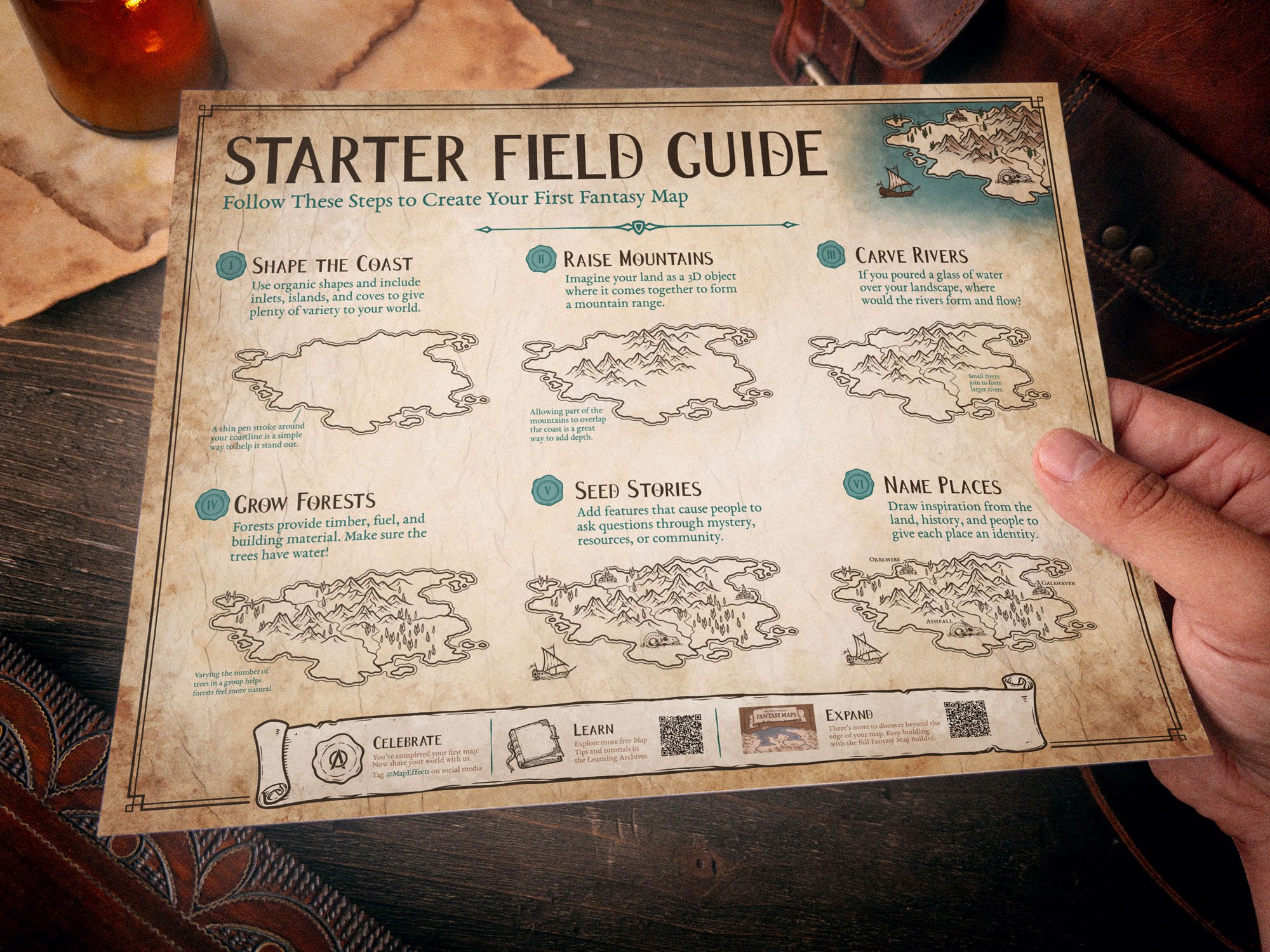
Get the free Starter Field Guide and follow the next steps from mountains to rivers, forests, settlements, and more.
Volcanic Mountain Ranges
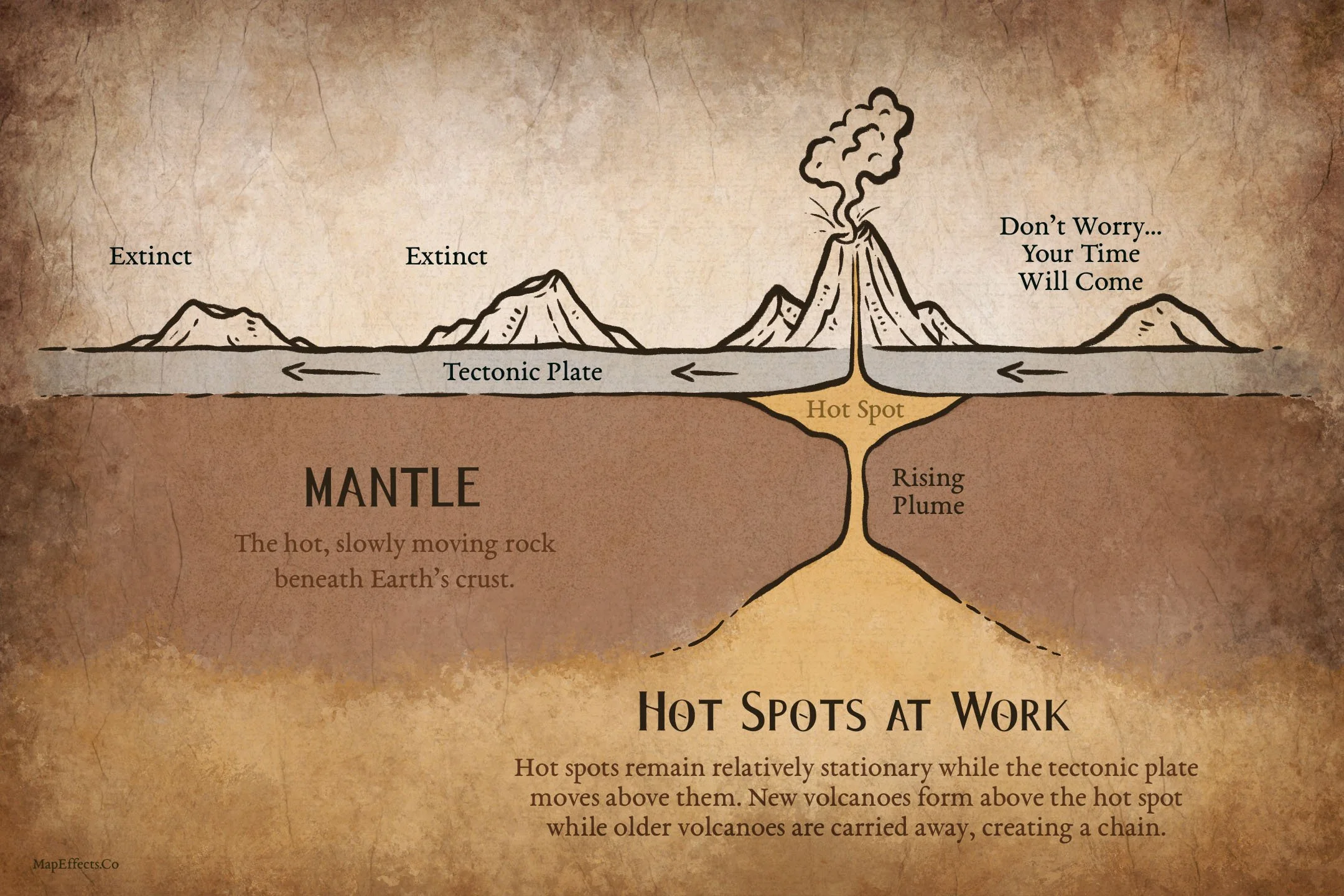
When we think about volcanoes, most of us understand that they can form along tectonic plates like we discussed before. As plates crush into one another, or especially if they pull apart, it allows magma to make it to the surface and form a volcano. But, while this is absolutely true, that’s not the whole story…
Volcanic Chains
Some volcanoes form far from plate boundaries, above what are called hot spots. What’s really cool, is these hot spots often remain relatively stationary while the tectonic plate slowly moves over them. That movement means the land above is shifting, while the thing that caused the volcano is not. Which is how you can end up with a chain of extinct or dormant volcanoes near an active one. As the plate passes over the hot spot, magma rises through the crust and a new volcano forms above it. Eventually that volcano is carried away and becomes inactive or fully extinct, while a new volcano begins forming over the hot spot.
What This Means for Your Map
Volcanoes are especially useful because they do not always need to behave like the long mountain ranges we have been talking about. You can place them as part of a volcanic chain, tuck them into a larger mountain system, or use one great volcano as the defining landmark of an entire region…The Lonely Mountain sound familiar? You could even trail older, extinct volcanoes away from an active one, hinting at how the land itself has moved over time.
And that brings us to the bigger point. Once you understand these few basic ways mountains can form, you are no longer searching for the one “correct” place to put them. You get to decide what you want the mountains to do for your world, then choose the geological explanation that makes your placement believable.
So the real question is no longer, “Where am I allowed to put mountains?” It’s “How will these mountains impact the story of my world?”
That’s where mountain placement starts becoming a storytelling decision, which is what we’ll tackle next.
How Mountains Affect Your World
Mountains are more than just scenery. They are one of the major forces shaping the world around them, influencing where rivers begin, where kingdoms rise, and even the weather different regions experience. In that sense, mountains really are the spine of your world, both visually and geographically.
As a storyteller, that means mountain placement is not merely a geological question…It is a storytelling decision. You are the one in the creative seat, and mountains are another tool you can use to shape the kind of world you want to build.
What Mountains Do to Your World
Create Natural Barriers
Mountain ranges divide regions, slow travel, create defensible borders, and help separate kingdoms, cultures, and languages.Shape Weather Patterns
Mountains force moving air upward, changing where rain falls, and can even cause deserts to form through something called Rain ShadowFeed Rivers
High elevations collect rain and snow, giving rivers natural places to begin before flowing into lowlands, and finally the ocean.Control Movement
Passes, valleys, and gaps determine where roads, armies, merchants, pilgrims, and travelers are most likely to cross.Create Valuable Resources
Mountains can hold metal ores, gems, or stone, turning mining towns into places of economic and political importance.Create Landmarks and Sacred Places
A lone peak, volcanic summit, or towering range can become a place of pilgrimage, danger, or legend.
Before you place a range, decide what job you want it to perform. Do you need a barrier between rival kingdoms? A source for the great river that feeds your capital? A rain shadow that explains your desert? Once you begin thinking this way, mountain placement becomes less about finding the one “scientifically correct location” and more about choosing a believable location that helps shape the world you want to create.
Placing Mountains on Your Map
At this point, you know how mountains form and what you want them to do in your world. Now let’s get practical and talk about actually putting them on your map. The easiest way to begin is not by drawing individual peaks, but by sketching simple lines to place mountain ranges.
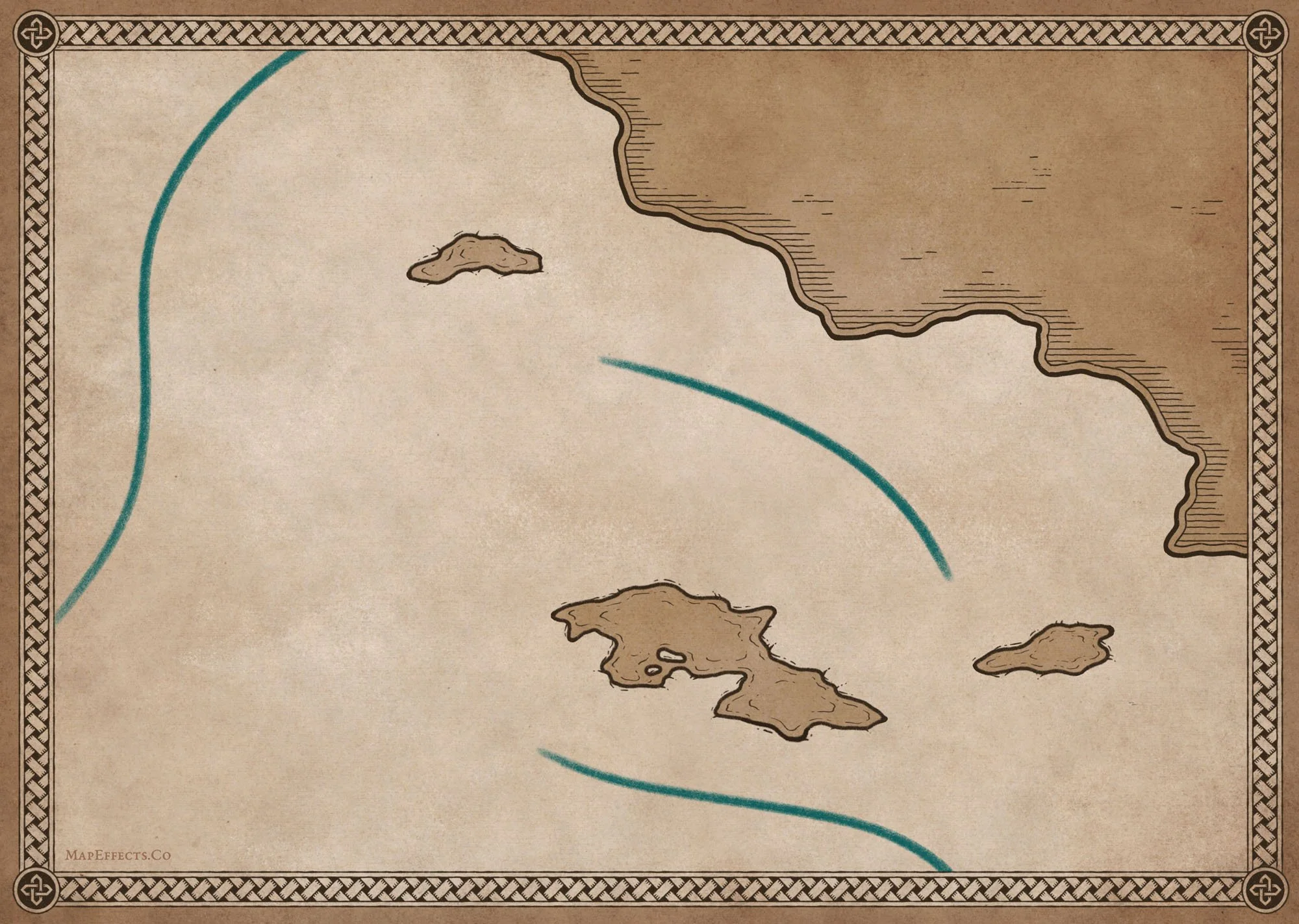
Sketch the Range Before the Mountains
Before you get lost drawing a bunch of mountains on your map, begin by sketching a few loose, curving lines that represent the main ridgeline. This lets you step back and focus on placement before you add a single mountain. Let the lines curve, narrow, widen, branch, or fade into the surrounding landscape. The main thing to avoid is randomly scattered mountains or perfectly straight rows.
Once those broad shapes feel right, start adding the actual mountains along them.
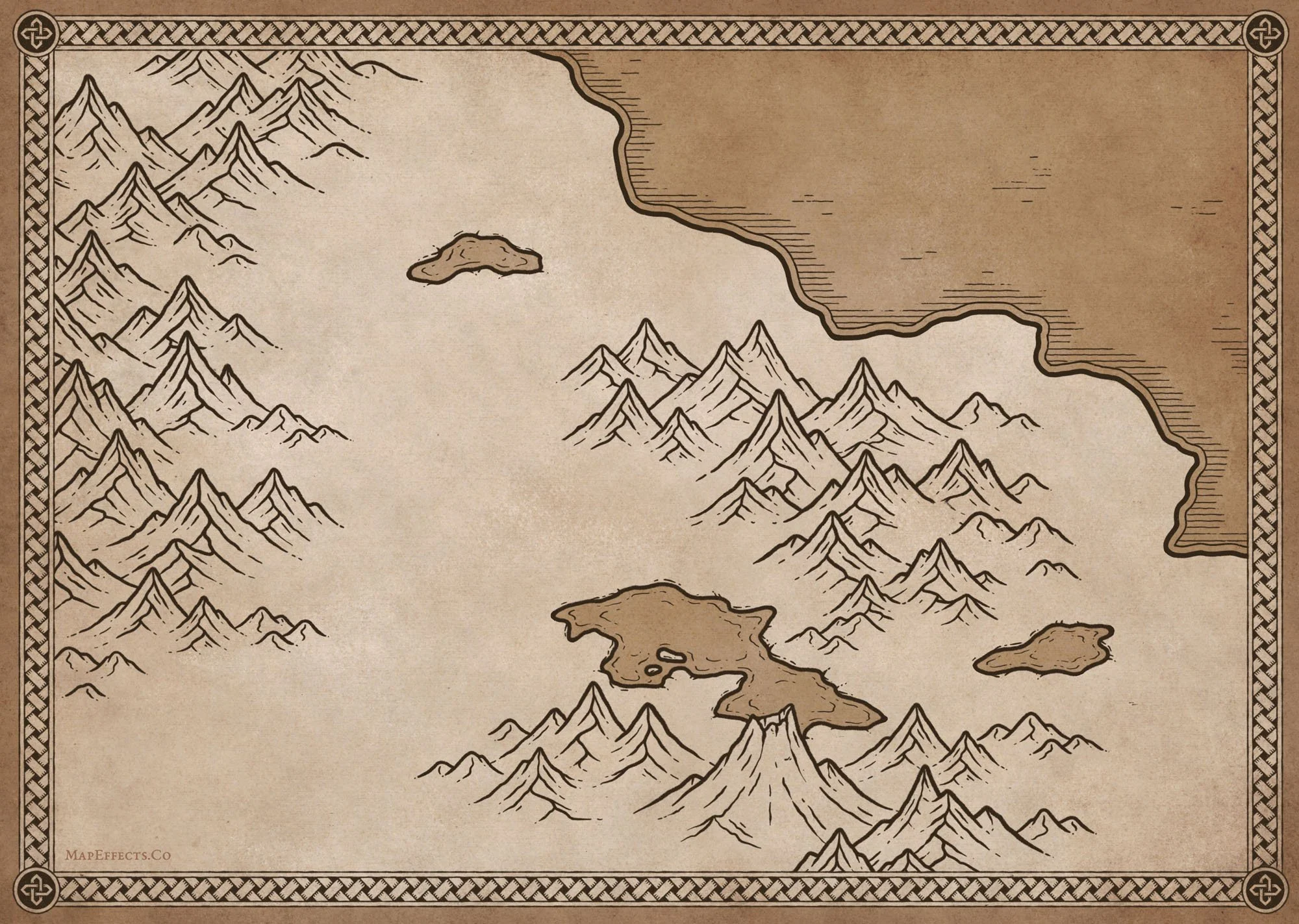
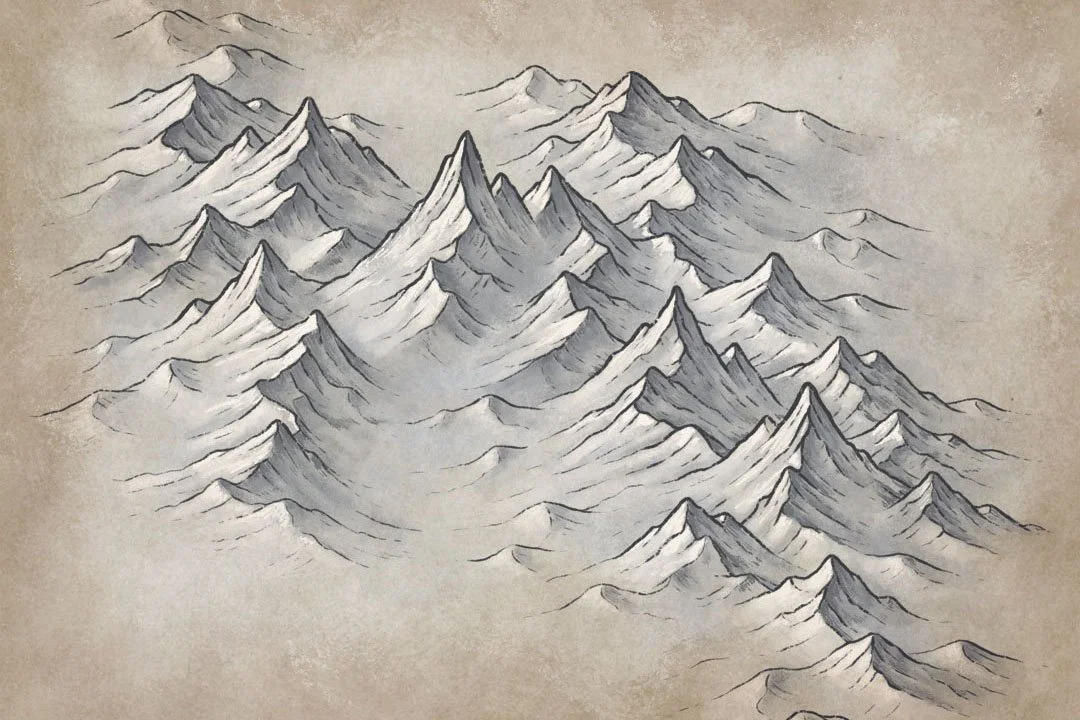
Now start building your mountains along the ridgelines you sketched in the previous step. Notice how the ranges curve and flow across the landscape rather than forming straight rows or scattered individual peaks.
This is where The Fantasy Map Builder becomes especially helpful. Instead of drawing every mountain individually, you can quickly build out entire ranges using the mountain brushes, like I did in the example above.
What’s next? Rivers!
Once your mountains are in place, the next part where we add rivers becomes much easier. Water naturally flows downhill from high ground, before eventually reaching the ocean. This means, the mountains you just placed have just given you a starting point for the next major feature of your world.
Keep Building Your Map
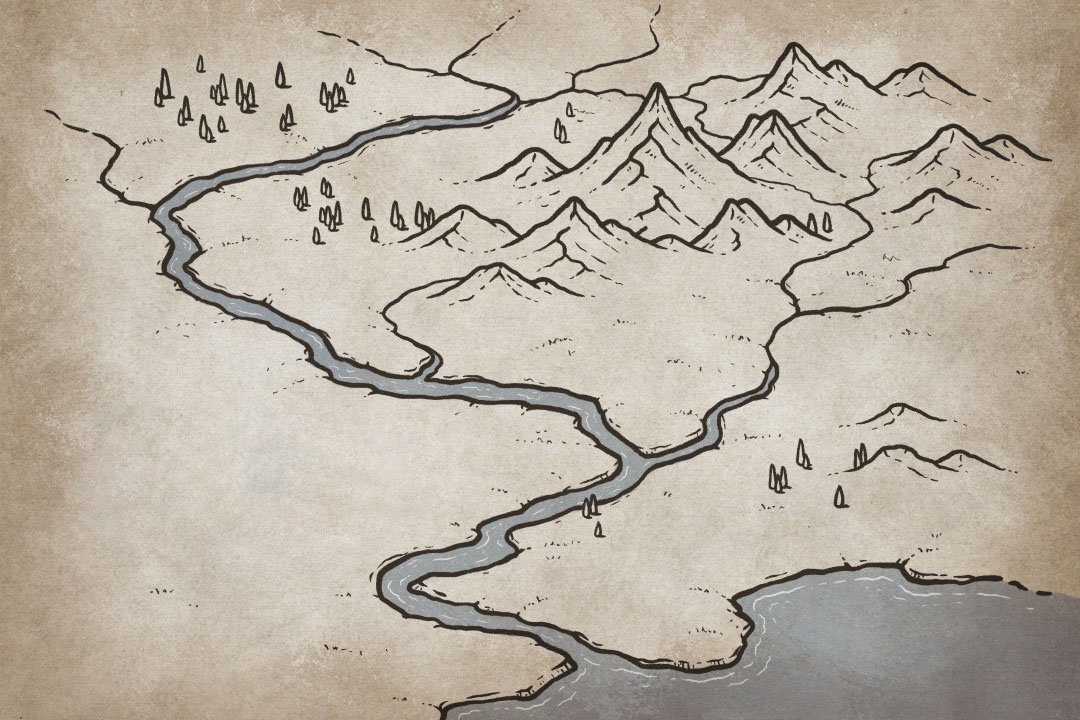
Where to Place Rivers
Learn where rivers begin, how they flow, and the mistakes to avoid.
How to Draw Mountains
Learn a simple technique for drawing believable mountain ranges by hand.
